
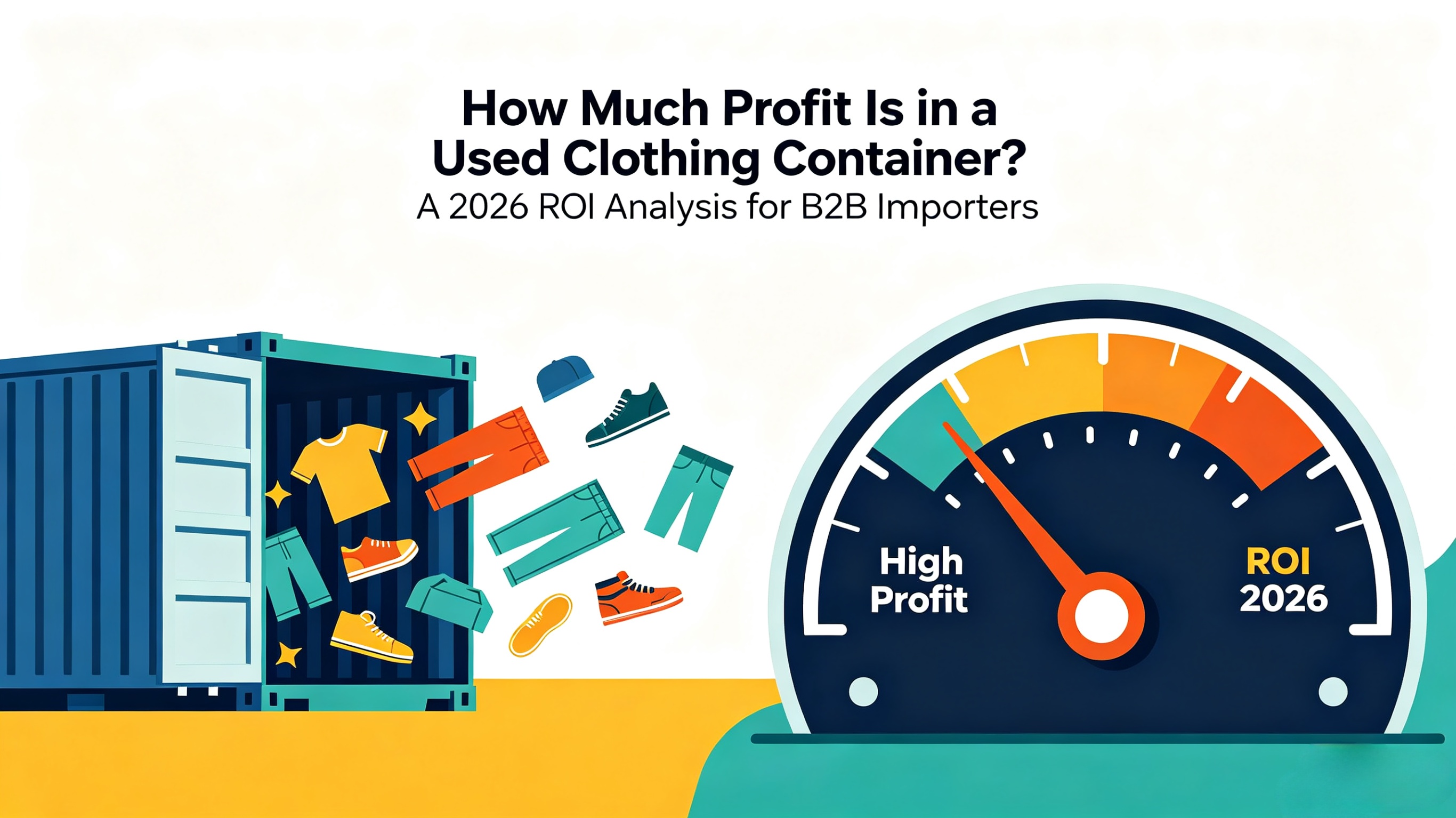
How Much Profit Is in a Used Clothing Container? A 2026 ROI Analysis for B2B Importers
1. Introduction: The "Green Gold" of the Circular Economy
The used clothing industry is often called "Green Gold" for a reason. In 2026, as global consumers continue to embrace affordable and sustainable fashion, the demand for high-quality second-hand goods has never been higher. For B2B importers in Africa, Southeast Asia, and Latin America, a single 40ft HQ container of used clothing, shoes, and bags represents a powerful opportunity for high returns.
But the most critical question for any serious entrepreneur is: "How much profit can I actually make?" Vague promises of "huge margins" are not enough to build a business plan. In this financial deep dive, we will break down the exact costs, revenue streams, and ROI (Return on Investment) calculations for a typical used clothing container, giving you the data you need to scale your used clothing business profit.
2. Understanding the Revenue Model: Where Does the Money Come From?
Before calculating profit, you must understand how revenue is generated in this industry. Unlike retail, your profit comes from "Bulk Arbitrage"—buying in bulk at a low per-kilogram cost and selling in smaller units at a higher value.
There are three primary revenue streams:
- Bale Reselling (Wholesale): Selling unopened bales to smaller market traders. This is fast cash but lower margin.
- Piece-by-Piece Retail: Opening bales and selling individual items at a market stall or thrift shop. This is the highest margin but requires more labor.
- Cream Picking & Online Sales: Extracting the best "Grade A+" or branded items and selling them online (e.g., Instagram, local marketplaces) at a premium.
3. The Cost Breakdown: Calculating Your Total Investment
To accurately measure your used clothing business profit, you must account for all "Landed Costs." Many new importers only calculate the purchase price and are shocked by the hidden expenses.
Here is a breakdown of the typical costs for a 40ft HQ container (approx. 26,000 kg) shipped from China to a major African or Asian port in 2026.
| Cost Component | Description | Estimated % of Total Cost |
|---|---|---|
| Goods (FOB Price) | The cost of the sorted clothes/shoes/bags. | 55% - 65% |
| Ocean Freight | Shipping the 40ft HQ container by sea. | 15% - 25% |
| Import Duties & Taxes | Customs duties at the destination port. | 5% - 15% |
| Clearing & Port Fees | Local handling, demurrage, and agent fees. | 3% - 8% |
| Inland Transport | Moving the container to your warehouse. | 2% - 5% |
4. Sample ROI Calculation: A 40ft HQ "Summer Mix" Container
Let’s use a hypothetical, simplified model to illustrate the potential used clothing business profit. (Note: These figures are illustrative for 2026 and vary by region and supplier.)
Scenario: A 40ft HQ container of Grade A Summer Clothing imported to Nigeria.
| Financial Metric | Estimated Value (USD) |
|---|---|
| A. Total Landed Cost (Goods + Freight + Duties) | $15,000 |
| B. Total Number of Bales (approx. 260 bales at 100kg) | 260 Bales |
| C. Cost Per Bale (A / B) | ~$57.6 |
| D. Average Selling Price Per Bale | ~$90 - $110 |
| E. Total Revenue (260 bales x avg. $100) | $26,000 |
| F. Gross Profit (E - A) | $11,000 |
| G. ROI Percentage (F / A) | ~73% |
Even after accounting for unsold items and minor expenses, a net profit margin of 30-50% is highly achievable with the right supplier and market.
5. The Profit Multiplier: Why Shoes and Bags Boost Your ROI
While clothing provides the volume, the real used clothing business profit boosters are shoes and bags.
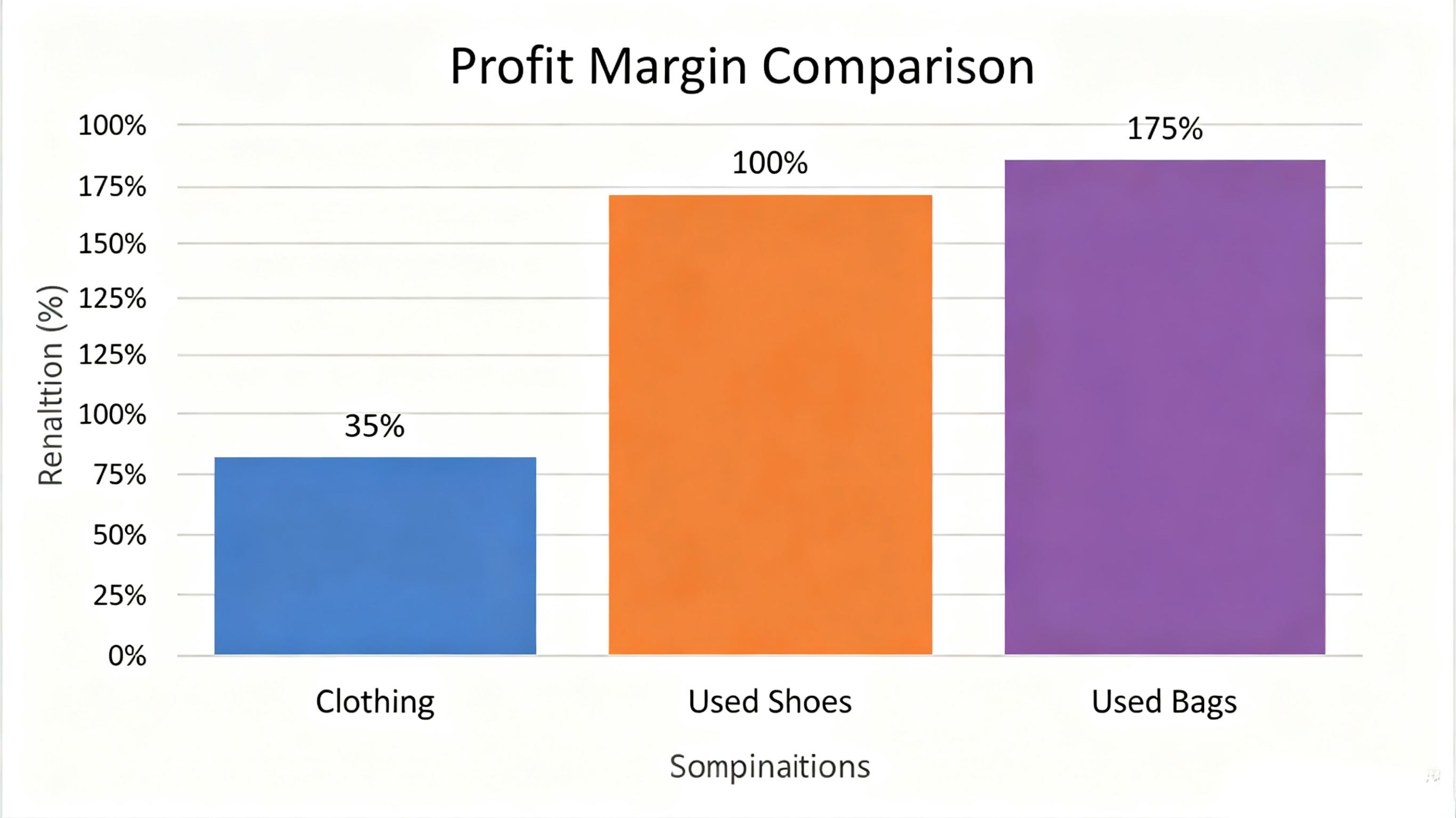
- Used Shoes: A bale of branded sneakers (Nike, Adidas) can yield a profit margin of 100% or more, as individual pairs can be sold for $10-$30 each in local markets.
- Used Bags: Due to their high "Value Density," bags take up little container space but sell for high prices. A single designer-style bag can sometimes cover the cost of an entire small sack.
Pro-Tip: A "Mixed Container" (e.g., 70% Clothes, 20% Shoes, 10% Bags) often yields a higher overall ROI than a container of clothes alone.
Learn why shoes are the "Gold Mine": 2026 Wholesale Used Shoes Profit Guide.
6. Regional Profitability: Africa vs. Southeast Asia
Your potential profit varies significantly based on your target market.
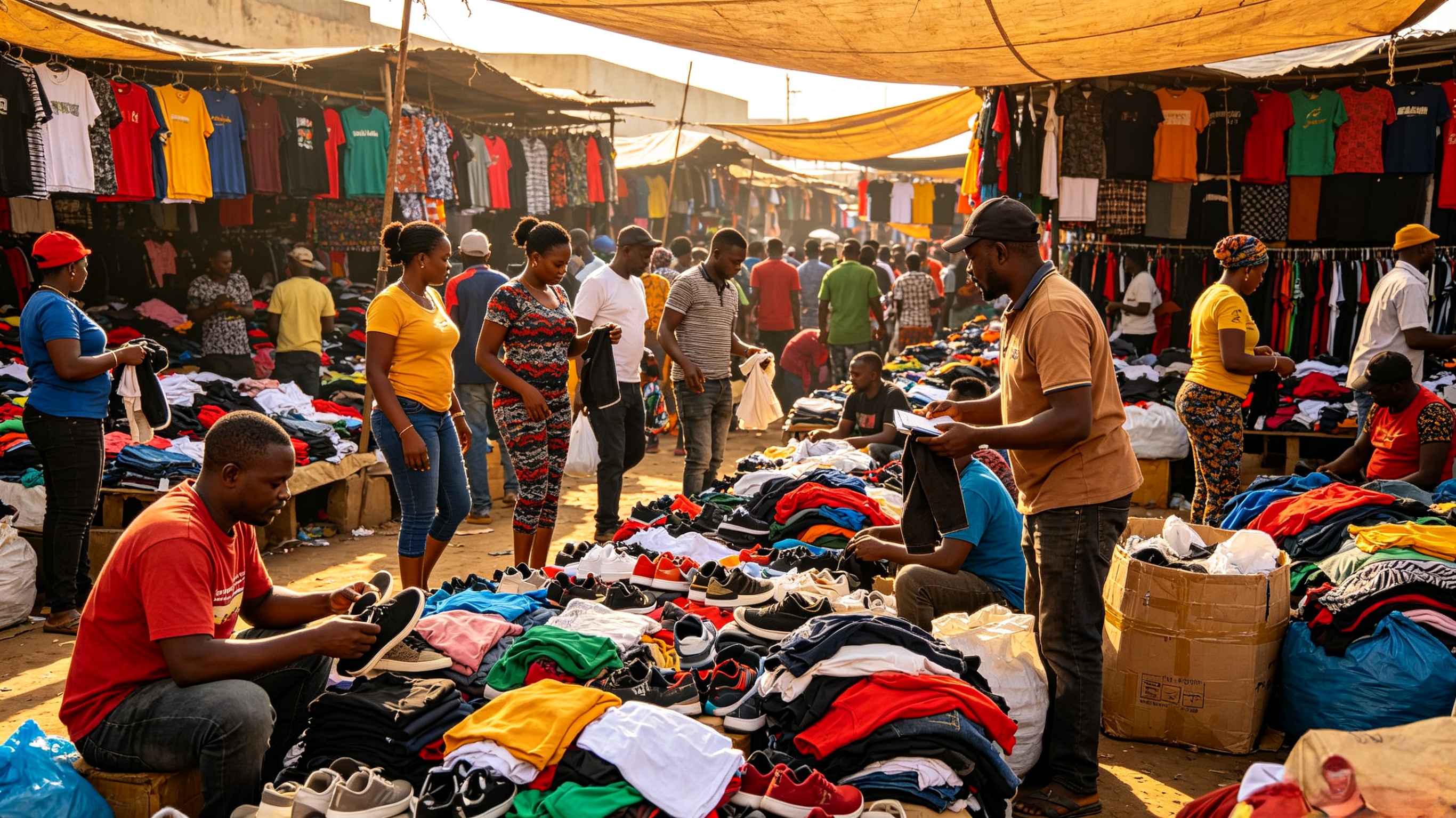
- The African Model (High Volume): Profit is driven by moving massive quantities. Margins per item might be lower, but the sheer volume of demand (especially for 100kg bales) ensures rapid cash flow.
- The Southeast Asian Model (High Curation): Profit is driven by "Cream Picking." Importers spend more on premium "Grade A" or "Branded" sorts and sell them at boutique prices in fashion-conscious cities like Manila or Bangkok.
Discover which model suits you: Africa vs. SE Asia Market Demand Analysis.
7. Hidden Factors That Affect Your Profit Margin
To maximize your used clothing business profit, you must control these variables:
- Quality Consistency: A "cheap" container full of "Grade C" trash will destroy your reputation and your profit. Quality is the #1 driver of repeat customers.
- Freight Volatility: In 2026, ocean freight rates can fluctuate. Locking in rates with a reliable forwarder is key.
- Customs Efficiency: Delays at the port (demurrage) can eat into your profits quickly. Ensure your supplier provides correct documentation.
- The "Sell-Through Rate": This is the percentage of goods you actually sell. A high-quality, well-sorted container can achieve a 90%+ sell-through rate.
8. Step-by-Step Guide to Maximizing Your First Container's Profit
- Choose the Right Mix: Don't just buy clothes. Add a sack of shoes and bags to boost margins.
- Verify the Supplier: Ensure you are buying from a real factory to guarantee quality.
- Calculate Landed Cost: Know your total cost before the container arrives.
- Pre-Sell Bales: If possible, sell some bales to local traders before they even arrive to ensure instant cash flow.
- Reinvest: Use the profit from your first container to order two more.
Make sure your supplier is legitimate: How to Avoid Used Clothing Scams
9. FAQ: Profitability Questions
Q: How quickly can I sell a 40ft container? A: With a strong local market, a well-sorted container can be sold within 2-4 weeks. Bale reselling can clear stock in just a few days.
Q: What is a "realistic" net profit margin? A: After all costs, a realistic net profit margin for a well-managed used clothing business in 2026 is between 30% and 50%.
Q: Do I need a huge amount of capital to start? A: While a 40ft HQ container is the most profitable, some importers start with a 20ft container or by sharing a container (LCL) to reduce initial investment.
10. Conclusion: Building a Sustainable Profit Machine
The used clothing business profit potential is undeniable, but it is not "magic." It is a result of smart sourcing, careful cost calculation, and strong market knowledge. By understanding the numbers behind every container, you transform your business from a "gamble" into a predictable, scalable profit machine.
At Guangzhou Tengchao Trading Co., Ltd. , we are committed to being your profit partner. We provide consistently high-quality Grade A goods, transparent pricing, and the logistics support you need to maximize your ROI on every single container.
Ready to calculate your potential profit?
Disclaimer: Figures are illustrative estimates for 2026 and actual profits may vary based on market conditions.
From One Container to Ten: How a Nigerian Entrepreneur Tripled His Used Clothing Business in 12 Months
The 2026 Global Importer’s Blueprint: Analyzing Used Clothing Demand in Africa vs. Southeast Asia
Related Article