
The Ultimate 2026 Guide to Avoiding Used Clothing Scams: How to Identify Reliable Factories in China
1. Introduction: The Dark Side of a Multi-Billion Dollar Industry
The global used clothing, shoes, and bags industry is booming, with 2026 projections reaching record heights. However, where there is high demand and large-sum B2B transactions, there are inevitably predators. For many importers in Africa, Southeast Asia, and Latin America, their first venture into "China sourcing" often starts with a nightmare: losing a $10,000 deposit to a ghost company or, worse, receiving a container filled with "Grade C" domestic waste instead of the promised Grade A fashion.
Understanding used clothing scams is not just about caution; it’s about understanding the technical and financial reality of how a factory operates. In this 2000-word comprehensive handbook, we will pull back the curtain on common industry scams and provide you with a technical framework to verify any supplier before you send a single dollar.
2. The Psychology of the Scam: Why Importers Fall for "The Trap"
Most scams in the used clothing trade succeed because they exploit the buyer's desire for the "Unrealistic Bargain." Scammers know that profit margins are tight for wholesalers, so they offer prices that are mathematically impossible for a legitimate factory to sustain.
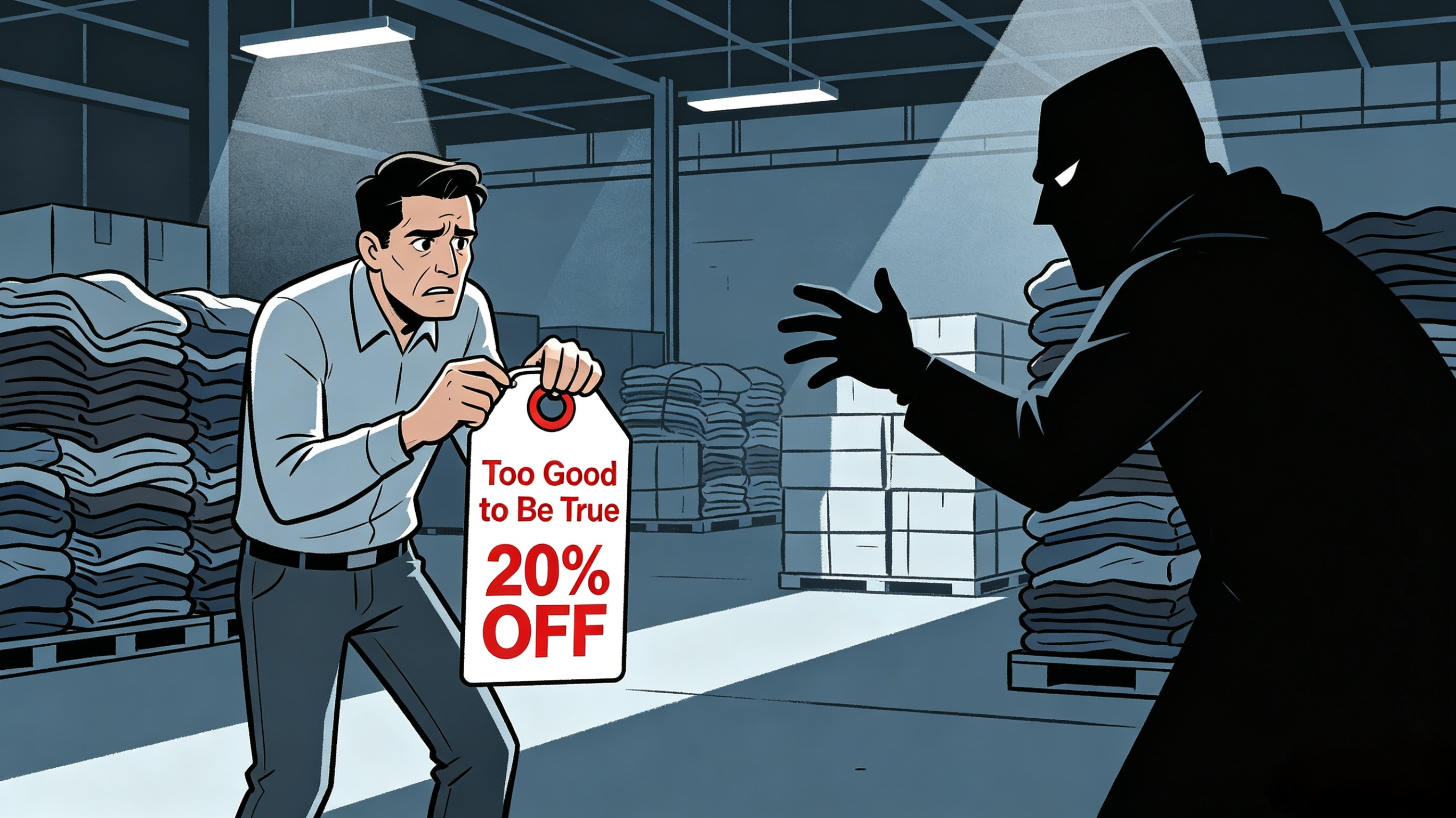
Before we dive into the red flags, remember this golden rule: If the price is 20% lower than the market average, you aren't buying a bargain; you are buying a scam.
3. Red Flag #1: The "Impossible Price" (Technical Cost Breakdown)
To identify a fake supplier, you must understand the cost floor of a Grade A product in China. A legitimate factory has non-negotiable costs:
- Raw Material Sourcing: Competitive urban collection costs.
- Labor for Sorting: Professional sorters require fair wages.
- Processing & Disinfection: Medical-grade cleaning and UV-C sterilization.
- Packaging & Consumables: High-density sacks and hydraulic pressing.
- Export Logistics & Licensing: Legal compliance and port handling.
Scam Alert: If a supplier offers Grade A summer clothes at $300-$400 per ton in 2026, they are either a scammer who will disappear after the deposit or a "Garbage Mixer" who fills the middle of the bale with unusable rags.
4. Comparison Table: Genuine Factory vs. Trading Company vs. Scammer
This table provides a quick reference for your initial vetting process.
| Feature / Indicator | Genuine Licensed Factory | Trading Company (Middleman) | Professional Scammer |
|---|---|---|---|
| Physical Facility | Owns a large warehouse/sorting line. | Usually an office in a city center. | No physical address or a fake one. |
| Video Audits | Willing to do live video calls anytime. | Often makes excuses (e.g., "factory is busy"). | Uses stolen/pre-recorded videos. |
| Business License | Matches the factory name & location. | Often registered as "Trading" or "Tech." | Fake or borrowed license from others. |
| Pricing Strategy | Market-aligned; stable. | Higher than factory (due to commission). | "Unbeatable" low prices. |
| Documentation | Can provide real BL, Fumigation, CNCA. | Can provide, but often delayed. | Provides photoshopped documents. |
| Payment Account | Official Corporate Bank Account. | Official Corporate Bank Account. | Personal accounts or Western Union. |
5. Red Flag #2: The Transparency Gap (Visual Verification)
A real factory in 2026 has nothing to hide. If you ask for a video call and the salesperson refuses, saying "the manager is out" or "our factory is in a remote area with no signal," stop the transaction immediately.
- The Live Audit Test: Ask the salesperson to walk to the sorting line and show you a specific item (e.g., "Show me a Nike shoe from the current pile"). Scammers using recorded videos cannot fulfill this request.
- The "Raw Material" Pile: A real factory will have massive piles of unsorted raw materials (raw bales). Scammers often only show finished, packed bales they’ve photographed in someone else’s warehouse.
6. Red Flag #3: Document and License Fraud
Documentation is the easiest thing to "Photoshop" but the hardest to "Verify" for an overseas buyer.
- Business License Check: Verify the "Business Scope" (经营范围). A real used clothing exporter must have "export of second-hand goods" or "textile recycling" in their scope. If it says "Consulting" or "E-commerce," proceed with extreme caution.
- Bill of Lading (B/L) History: Ask for copies of B/Ls from the last 3 months to your region. Cross-reference the "Shipper" name with the bank account name. If they don't match, you are dealing with a third party.
7. The "Container Loading" Scam
This is a more sophisticated scam where the company actually exists, but they are "Dishonest Suppliers."
- The "Sandwich" Bale: They put Grade A clothes on the top and bottom of the bale, but the core is filled with wet, torn, or heavy "trash" items to make weight.
- Weight Manipulation: They manipulate the weighing scale during the loading video.
- Solution: Always insist on a Third-Party Inspection (like SGS or BV) for your first 2-3 containers if you cannot visit in person.
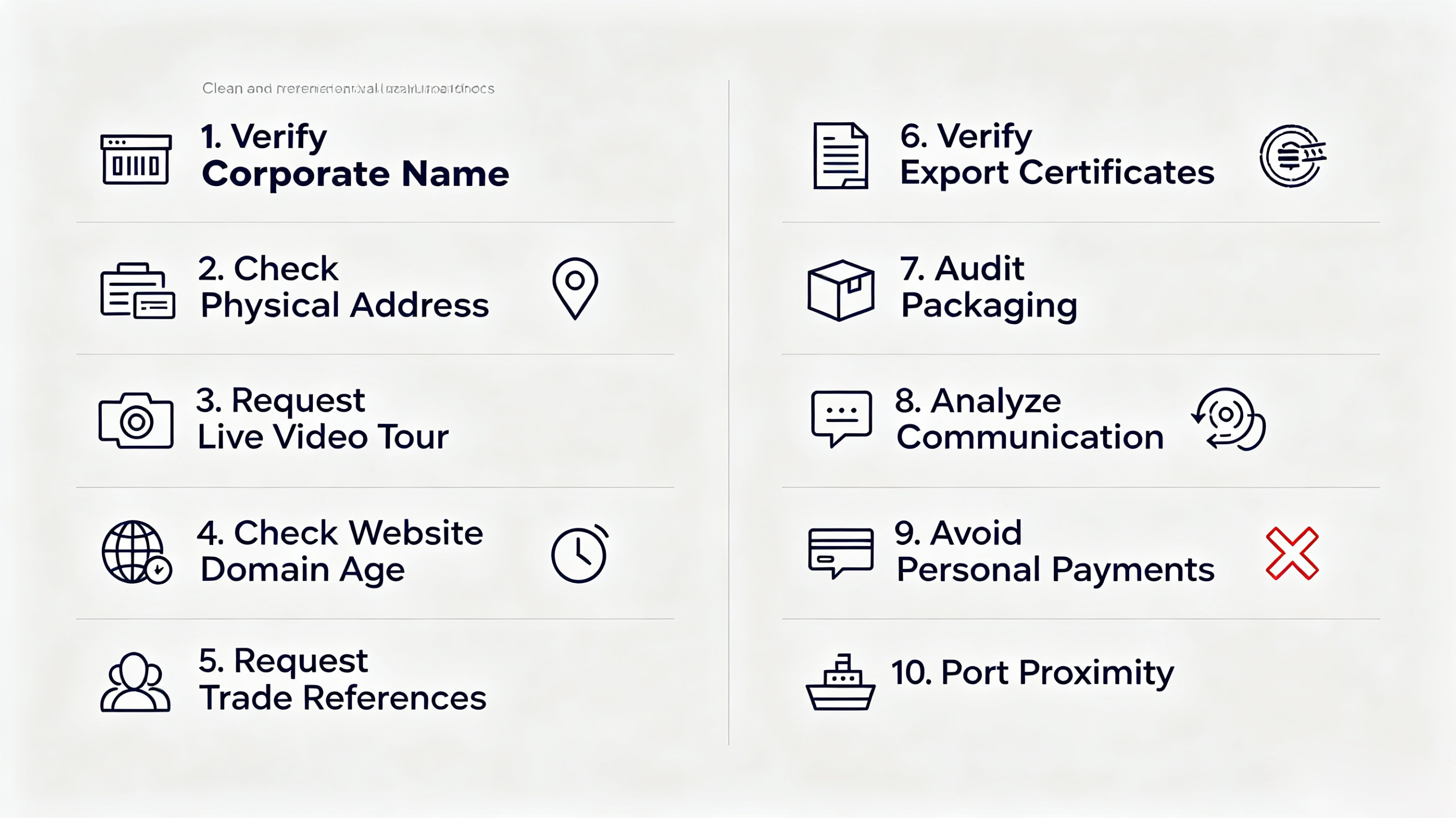
8. Step-by-Step Verification Checklist (The 10-Point Audit)
Before signing a contract, go through this checklist:
- Verify the Corporate Name: Does the name on the website, bank account, and license match exactly?
- Check the Physical Address: Use Google Maps or Baidu Maps to see if the address is an industrial zone or a residential apartment.
- Request a Live WhatsApp/WeChat Video Tour: Observe the number of workers and the volume of raw materials.
- Check the Website Domain Age: Use "Whois" to see when the site was created. Most scammers have websites less than 1 year old.
- Request Trade References: Ask for the phone number of a customer in a neighboring country.
- Verify Export Certificates: Ask for a recent Fumigation or Health certificate issued in their name.
- Audit the Packaging: Do they have their own branded sacks, or are they using generic ones?
- Analyze the Communication: Do they understand the technicalities of "40ft HQ volume" and "bale compression"?
- Avoid Personal Payments: Never send money to a personal name (e.g., "Mr. Zhang"). Only pay to the corporate account.
- Port Proximity: Legitimate factories are usually located near major ports (Guangzhou, Shenzhen, Ningbo, Tianjin). An "export factory" in a landlocked mountain province is a red flag.
9. Logistics Scams: The "Freight Forwarder" Trick
Sometimes the scam isn't the clothes; it’s the shipping.
- The Scam: The supplier says they found an "incredibly cheap" shipping agent. You pay the freight, and then the agent "holds the container hostage" at the destination port, demanding an extra $5,000 for "hidden fees."
- The Solution: Always try to get a quote from your own freight forwarder. If the supplier's quote is significantly lower, ask for an "All-in" written guarantee.
10. FAQ: Common Concerns from New Importers
Q: Is it safe to buy from Alibaba or Made-in-China? A: These platforms have "Verified" badges, but they are not 100% foolproof. Scammers can still buy "Gold Supplier" accounts. Use the live video audit as your primary tool regardless of the platform.
Q: Should I pay by Letter of Credit (L/C)? A: For large orders, L/C is the safest. However, many used clothing factories prefer T/T (Telegraphic Transfer) due to the high turnover of cash. If you use T/T, never pay 100% upfront. The standard is 30-50% deposit and the balance against the B/L copy.
Q: Can I trust "Export Agents"? A: Only if they have a physical office and a track record. Agents often add 10-15% to the cost. Direct factory sourcing is always more profitable and transparent.
11. Conclusion: Protecting Your Business Future
The used clothing business is built on long-term relationships. A scammer wants your money once; a legitimate factory wants your business for the next ten years. By following this verification guide, you aren't just protecting your current deposit—you are building a secure foundation for your business growth.
At Guangzhou Tengchao Trading Co., Ltd. , we pride ourselves on radical transparency. We invite every potential client to audit us, video call us, and visit us. We don't just sell bales; we sell the security of a professional supply chain.
Don't leave your investment to chance. Start your verified sourcing journey today.
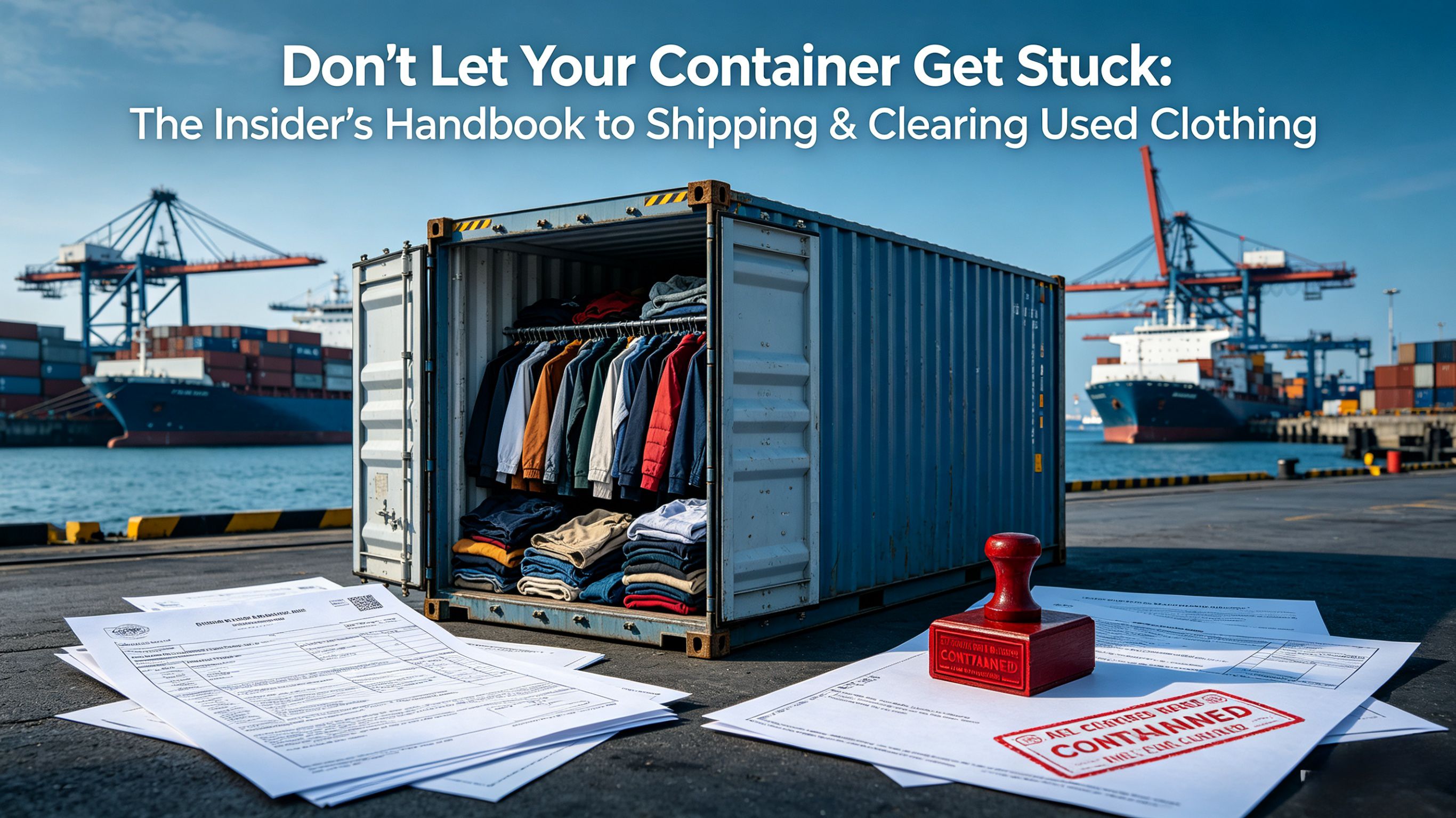
Don't Let Your Container Get Stuck: The Insider’s Handbook to Shipping & Clearing Used Clothing
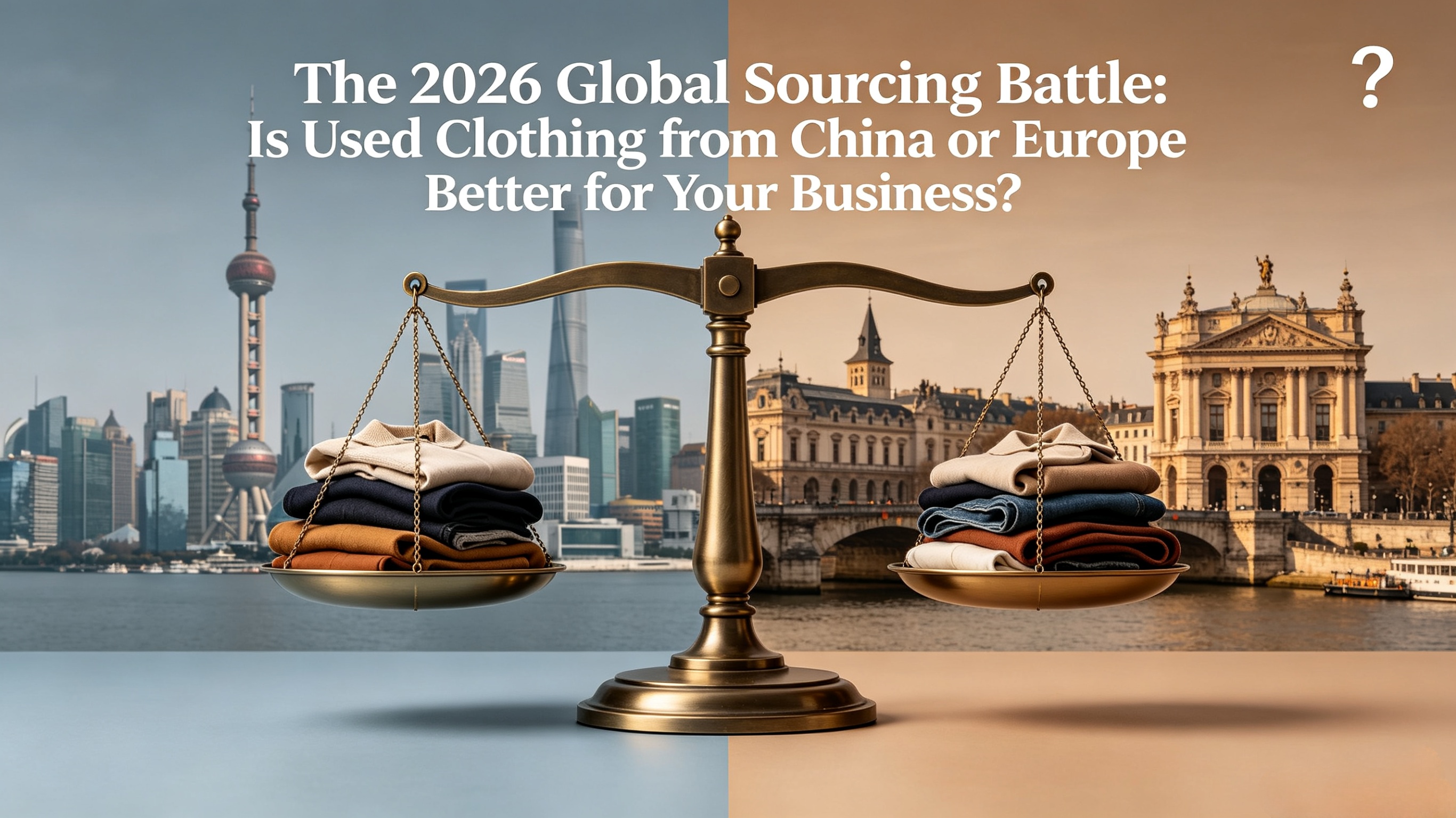
The 2026 Global Sourcing Battle: Is Used Clothing from China or Europe Better for Your Business?
Related Article