
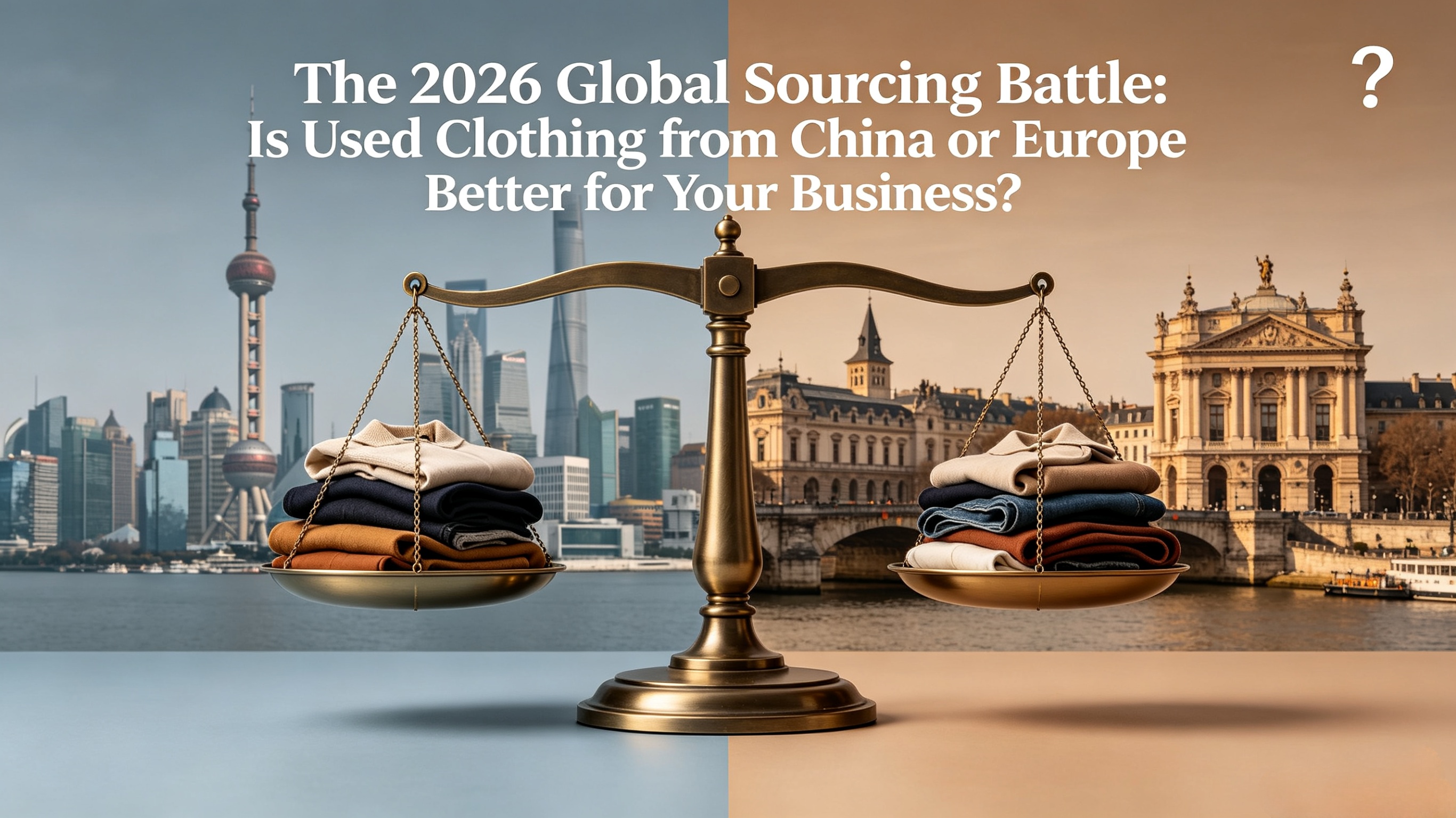
The 2026 Global Sourcing Battle: Is Used Clothing from China or Europe Better for Your Business?
1. Introduction: The Shifting Tides of Global Textile Reuse
For over half a century, the global second-hand clothing trade was a one-sided story dominated by European and North American exporters. However, as we enter 2026, a new titan has emerged. China’s rapid economic rise and urban development have transformed it into the world's most dynamic source of used textiles.
For B2B importers in Africa, Southeast Asia, and Latin America, the choice between used clothing from China vs. Europe is no longer just about price. it’s a strategic decision that affects inventory turnover, customer satisfaction, and long-term ROI. This 1500-word deep dive provides a technical, commercial, and logistical comparison to guide your next 40ft HQ container investment.
2. The Raw Material Source: Urban Modernity vs. Classic Heritage
The primary difference between these two sources begins at the collection point.
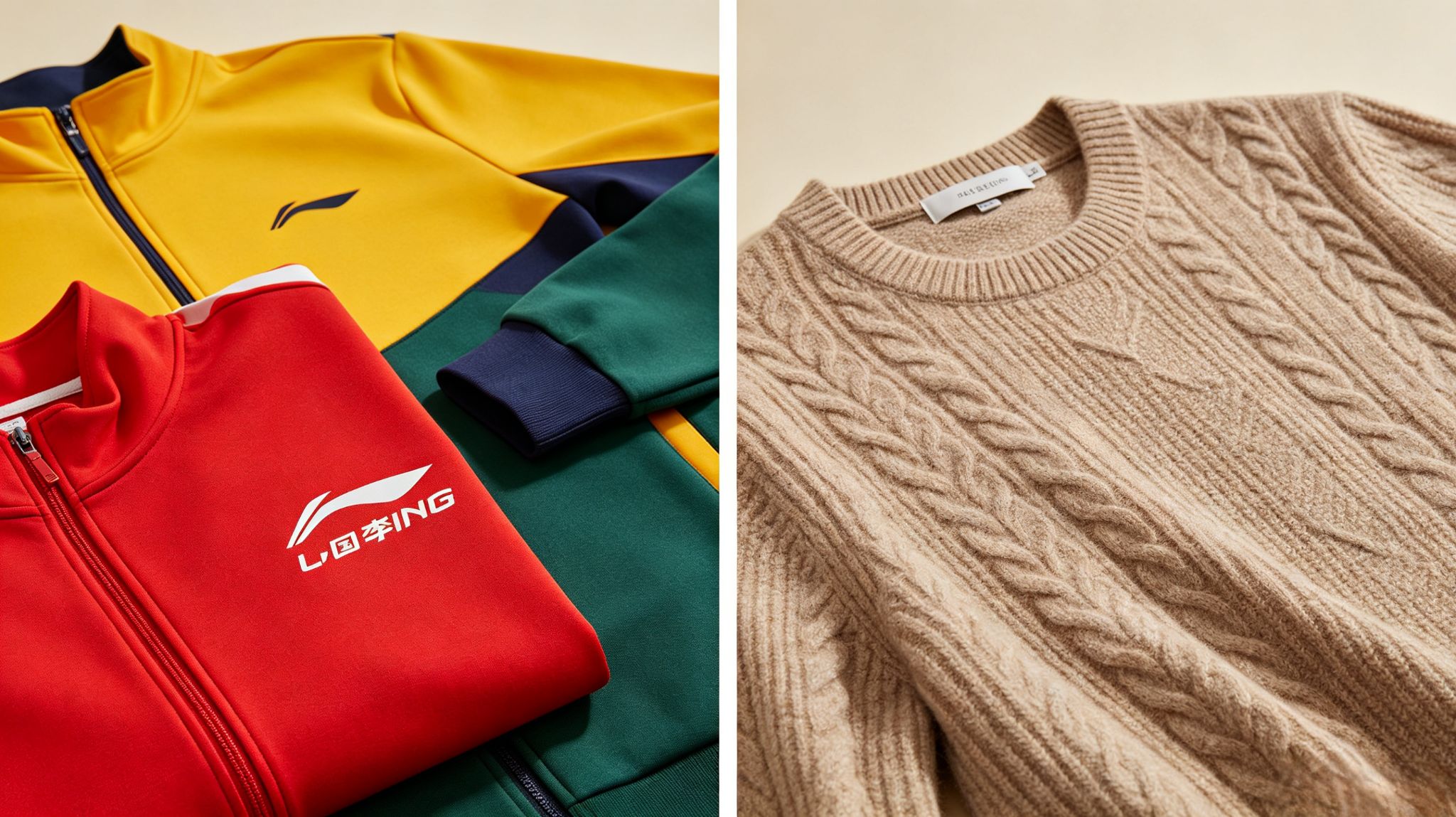
- China’s Urban Collection Advantage: Chinese used clothes are primarily collected from "Tier-1" cities like Shanghai, Beijing, and Guangzhou. Because China has one of the world's fastest "Fast Fashion" consumption rates, the clothes entering the recycling stream are often only 6 to 12 months old. This results in vibrant colors, modern cuts, and fibers that have not been weakened by years of washing.
- Europe’s Donation Heritage: European goods (often from Germany, the UK, or Italy) are collected through long-standing charity bin systems. While the quality of materials (like wool and heavy cotton) is excellent, the styles are often "Classic" or "Vintage." For markets that crave the latest "Streetwear" or "TikTok Trends," European bales can sometimes feel outdated.
3. Detailed Comparison Table: China vs. Europe
To help you visualize the differences, we have compiled this technical comparison table based on 2026 market data.
| Feature / Metric | Chinese Used Clothing | European Used Clothing |
|---|---|---|
| Fashion Cycle | Ultra-Fast (Modern/Trendy) | Moderate (Classic/Vintage) |
| Color Vibrancy | High (Less wash cycles) | Moderate (Higher durability focus) |
| Standard Sizing | S, M, L (Slimmer/Asian Fit) | L, XL, XXL (Wider/Western Fit) |
| Brand Density | High (Nike, Adidas, Jordan focus) | Moderate (Designer/Heritage focus) |
| Sorting Cost | Competitive (Semi-automated) | High (Manual/Charity based) |
| Shipping Time to SE Asia | 7 - 15 Days | 30 - 45 Days |
| Main Target Markets | SE Asia, Africa, Middle East,South America | Africa, Eastern Europe, LatAm |
Historically, European bales were preferred in West Africa due to larger sizing. However, in 2026, the game has changed.
- The Sizing Myth: While it’s true that Chinese domestic sizes are smaller, professional export factories in China now implement Specialized Sizing Sorts. At Guangzhou Tengchao Trading Co., Ltd. , we extract the larger size distributions from our urban collections specifically for our African clients.
- The Fit Factor: Southeast Asian markets (like the Philippines and Thailand) almost exclusively prefer the Chinese fit, as European "XL" items often require expensive tailoring before they can be sold locally.
5. Brand Ratios and ROI: The Battle of the Labels
In the second-hand trade, a brand is a guarantee of profit.
- Sportswear Dominance: China is the largest global consumer of Nike and Adidas. Consequently, a Chinese Grade A bale often has a 30-40% higher density of international sportswear than a comparable European bale. For wholesalers targeting the "Youth" and "Athleisure" markets, China offers a superior brand-to-weight ratio.
- Luxury Heritage: Europe remains strong for finding "Heritage" brands like Burberry, Armani, or Lacoste. However, these are often removed by European sorters to be sold in high-end "Vintage Boutiques," leaving fewer "Gems" for the wholesale importer.
6. Sorting Precision: Manual vs. Semi-Automated
The cost of labor in Europe has forced many exporters to move toward "Rough Sorting."
- The European Dilemma: High labor costs mean less time spent on each garment. This can lead to a higher "Error Rate" in Grade A bales (e.g., missed stains or small holes).
- The Chinese Efficiency: By combining efficient labor with semi-automated conveyor systems, Chinese factories can afford to perform a 1-by-1 manual inspection on every single item.
7. ROI Calculation: Which Bale Makes More Money?
Let’s look at a hypothetical 40ft HQ container ROI comparison (based on average 2026 market prices).
| Investment Factor | China Container (28 Tons) | Europe Container (28 Tons) |
|---|---|---|
| Initial Purchase Price | $56000 (Competitive) | $78400 (Higher overhead) |
| Freight Cost (to Africa) | Moderate | Moderate |
| Sell-Through Rate | 92% (High demand for modern styles) | 85% (Classic styles move slower) |
| Potential Profit Margin | 25% - 35% | 15% - 25% |
8. Logistics, Lead Times, and the "Belt and Road" Influence
Logistics is the "silent killer" of profit.
- Proximity: For Southeast Asian importers, sourcing from China is a no-brainer. The 10-day lead time allows for "Lean Inventory" management.
- Infrastructure: China’s investment in port infrastructure means containers are loaded and cleared faster. European ports, while efficient, are often subject to higher port fees and more frequent labor strikes, which can delay your shipment by weeks.
9. FAQ: Common Concerns for Importers
Q: Is the quality of fabric better in Europe? A: Europe often has higher-quality "Heavy" fabrics (wool, thick cotton). However, China has superior "Light" and "Technical" fabrics (Dri-FIT, modern synthetics), which are more suitable for tropical climates.
Q: Do Chinese bales have more "Trash"? A: Not if you buy from a licensed factory. Scams happen when buyers choose unlicensed "trading companies." Professional Chinese factories have stricter rejection rates than many European facilities.
Q: Which source is better for a new business? A: China is generally better for newcomers due to lower entry costs and styles that are easier to sell to the modern, social-media-influenced consumer.
10. Conclusion: The Verdict for 2026
While Europe will always have a place in the "Vintage" and "Heavy Winter" niches, China has become the superior all-around source for the modern B2B importer. The combination of fast-fashion modernity, high branded sportswear density, and superior sorting efficiency makes Chinese used clothing the most profitable choice for 2026.
At Guangzhou Tengchao Trading Co., Ltd. , we adopt the best practices of global trade to ensure our Chinese cargo meets and exceeds European quality expectations.
Ready to compare the quality for yourself?
The Ultimate 2026 Guide to Avoiding Used Clothing Scams: How to Identify Reliable Factories in China
The Technical Blueprint: Inside Our Advanced Used Clothing Factory Process and 2026 Quality Control Standards
Related Article