
The Technical Blueprint: Inside Our Advanced Used Clothing Factory Process and 2026 Quality Control Standards
1. Introduction: Eliminating the "Black Box" of Sourcing
In the global B2B trade of used clothing, shoes, and bags, the most valuable commodity is transparency. For an importer in Lagos, Manila, or Santiago, sending a significant deposit to a factory thousands of miles away is a leap of faith. Too often, the industry is a "black box"—you see the beautiful marketing photos, but what actually happens behind the warehouse doors?
At Guangzhou Tengchao Trading Co., Ltd. , we believe that a professional used clothing factory process is what separates a sustainable business from a one-time transaction. In 2026, we have set a new industry benchmark by integrating semi-automated sorting, medical-grade disinfection, and logistics engineering. This deep dive pull back the curtain on our facility, proving why our Grade A standard is the most consistent in the market.
2. The Foundation: Strategic Raw Material Collection
Every high-quality bale starts with high-quality raw material. Our process begins long before the first item hits the sorting belt.
- The Tier-1 City Strategy: We exclusively source our materials from China's first-tier urban centers—Shanghai, Beijing, Guangzhou, and Shenzhen. These cities have the highest fashion replacement rates and the highest density of international brands.
- Initial Screening at the Gate: Not all collected items enter our sorting line. We have a strict "Gate Rejection" policy for materials that show signs of moisture, mold, heavy domestic wear, or outdated styles.
- Dry Storage Management: Our warehouse utilizes advanced climate control to ensure that raw materials stay 100% dry. Moisture is the enemy of used textiles; it leads to odors and fiber degradation that cannot be reversed.
3. Comparison: Our Professional Factory vs. Generic Trading Companies
This table highlights the technical differences that directly impact your profit margins.
| Process Stage | Our 2026 Factory Standard | Generic Trading Company |
|---|---|---|
| Sourcing | Direct Tier-1 Urban Collection | Mixed collection from small towns/villages |
| Sorting Staff | Specialized teams (Min. 3 years exp) | General laborers with high turnover |
| Category Mix | 120+ Detailed Categories | 30-50 Basic Categories |
| Hygiene | UV-C Sterilization & Ozone Treatment | No disinfection or simple perfume spray |
| QC Audit | 3-Stage 1-by-1 Inspection | Random "look-over" at packing |
| Loading Plan | 3D-Optimized Weight/Volume Balance | Manual stacking with wasted space |
4. The Sorting Ecosystem: Where Precision Meets Fashion
The core of our used clothing factory process is our 5-step sorting ecosystem. We treat sorting not just as "labor," but as "curation."
- Step 1: Primary Bulk Sorting: Removal of heavy "non-export" items like bulky winter coats (for tropical orders) or badly torn items.
- Step 2: Category Segmentation: Items are divided into over 120 specific categories. For example, "Ladies' Summer Wear" is further split into Silk Dresses, Cotton Blouses, Skirts, and Crop Tops. This allows you to order exactly what your customers want.
- Step 3: Technical Grading (Grade A Selection): Sorters check for the "Four No's": No holes, No stains, No pilling, No fading.
- Step 4: Style Audit: In 2026, fashion moves fast. Our style auditors remove items that are technically "clean" but fashionably "outdated" (e.g., styles from over 5 years ago).
- Step 5: Brand Extraction: Dedicated teams identify and extract international labels (Nike, Jordan, Zara) to meet the "Brand Ratio" requirements of our premium clients.
See how this sorting process is applied to footwear: 2026 Used Shoes Grading Guide .
5. Advanced Hygiene: Beyond "Visual Cleanliness"
Visual grading is common; medical-grade disinfection is rare. In 2026, we have implemented a hygiene protocol that exceeds international health standards.
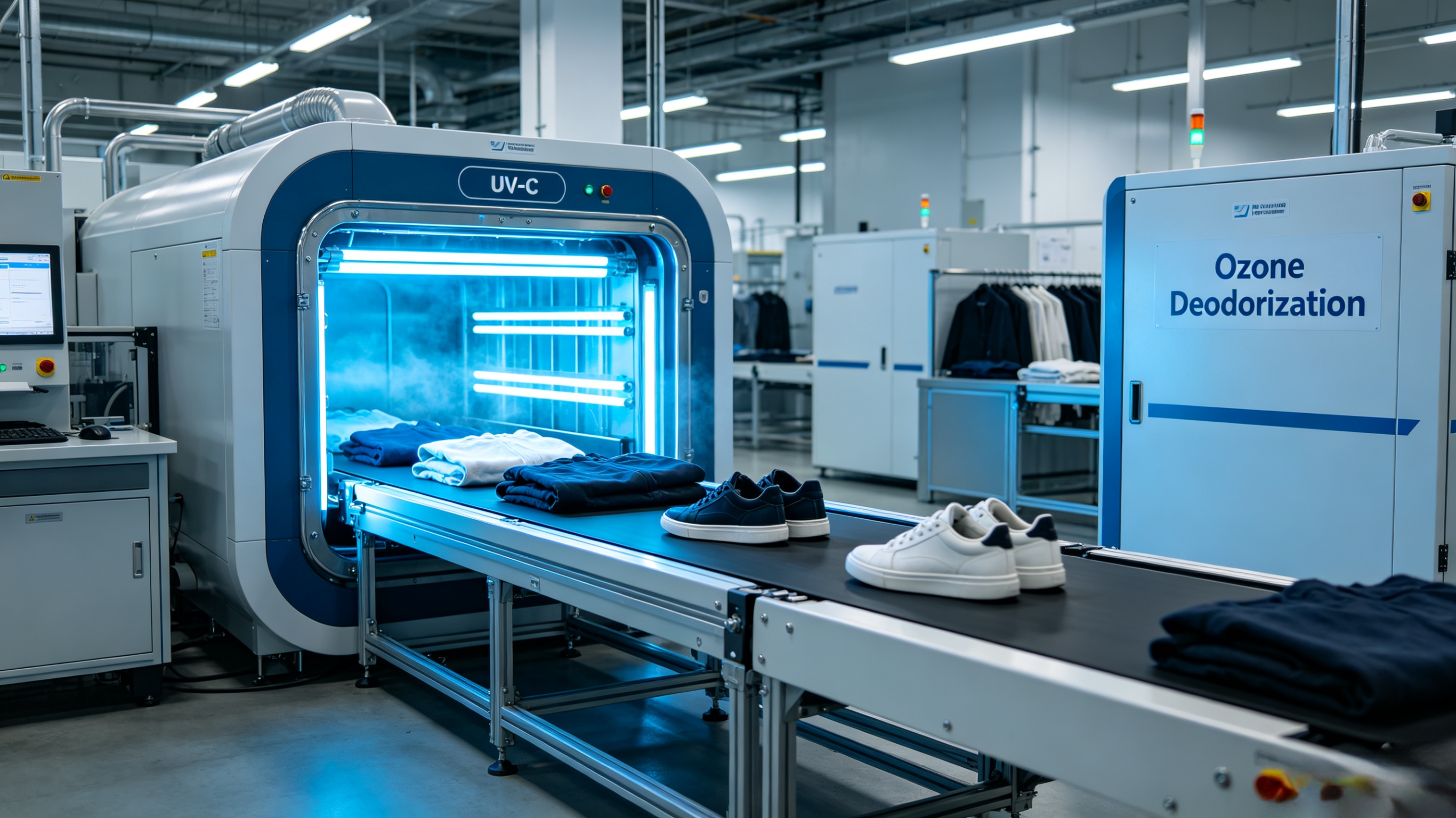
A. UV-C Sterilization Tunnel Every item of clothing and every shoe passes through a custom-built UV-C sterilization tunnel. This high-intensity ultraviolet light destroys 99.9% of surface bacteria, fungi, and viruses, ensuring the safety of both your staff and your end customers.
B. Ozone (O3) Deodorization Unlike cheap perfume sprays that just mask odors, our Ozone chambers chemically break down the molecules that cause "used clothing smells." The result is a neutral, fresh-smelling product that can be put directly onto retail hangers.
C. Antifungal Footwear Treatment Used shoes are prone to fungal growth during 40-day sea transits. We apply a specialized, skin-safe antifungal mist to all footwear categories.
6. Engineering the Bale: Compression and Protection
The physical packing of the goods is a critical step in the used clothing factory process. If a bale is too loose, you lose money on shipping; if it's too tight, you damage the fibers.
- Hydraulic Precision: Our 2026-model hydraulic presses are calibrated to specific PSI (Pounds per Square Inch) for different fabrics. Silk and chiffon require lower pressure, while cotton and denim can handle higher compression.
- Bale Weight Accuracy: We offer 45kg, 55kg, 80kg, and 100kg bales. Every bale is weighed on digital scales calibrated daily to ensure you get exactly what you pay for.
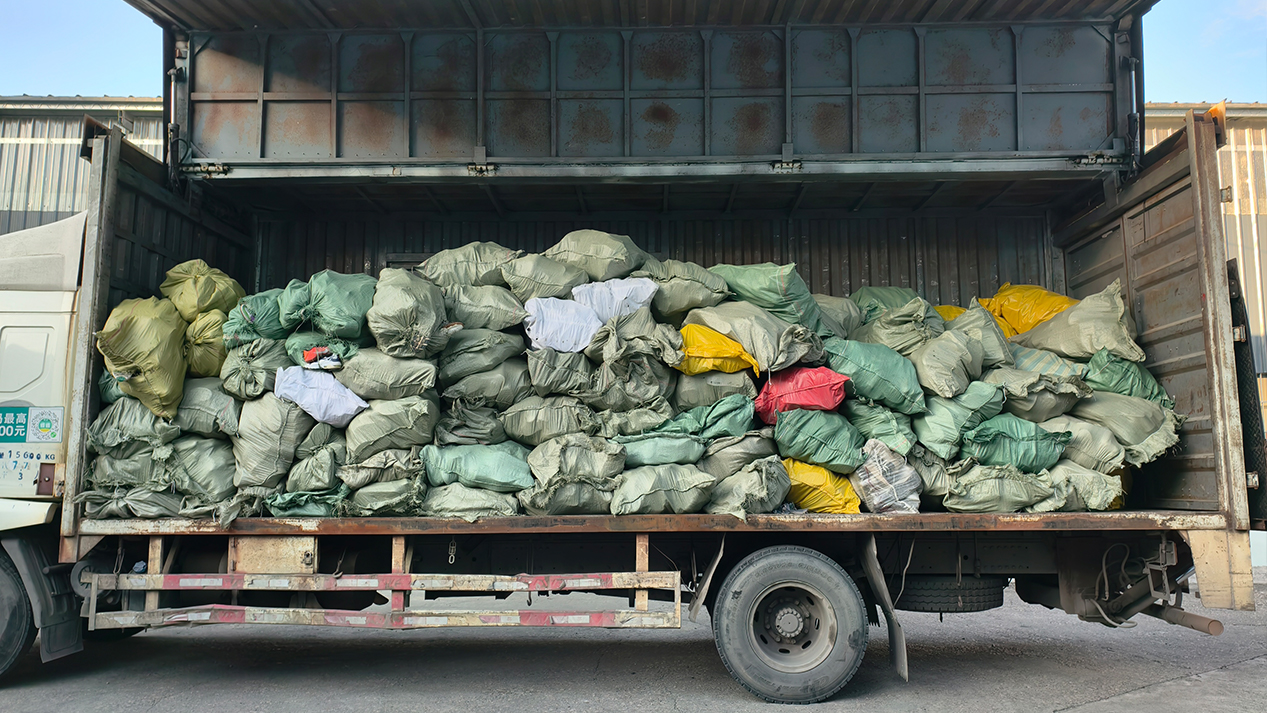
- Triple-Layer Protection: We use high-density, waterproof woven sacks (available in custom colors) secured with industrial-strength polyester strapping that will not rust or snap under tension.
7. Quality Control (QC): The Final Gatekeeper
Our QC department is independent of the production team. Their only job is to find mistakes.
- Random Sampling: For every 40ft HQ container, our QC manager randomly selects 5 bales to be cut open and completely re-sorted to verify the Grade A ratio.
- Documentation Audit: Before loading, we verify all certificates (Fumigation, Health, Phytosanitary) and ensure the Bill of Lading (B/L) information is 100% accurate.
- Visual Confirmation: We provide our clients with a "Loading Report" containing photos of the raw materials, the sorting line, the finished bales, and the container seal.
8. Logistics Engineering: The "3D Tetris" of Container Loading
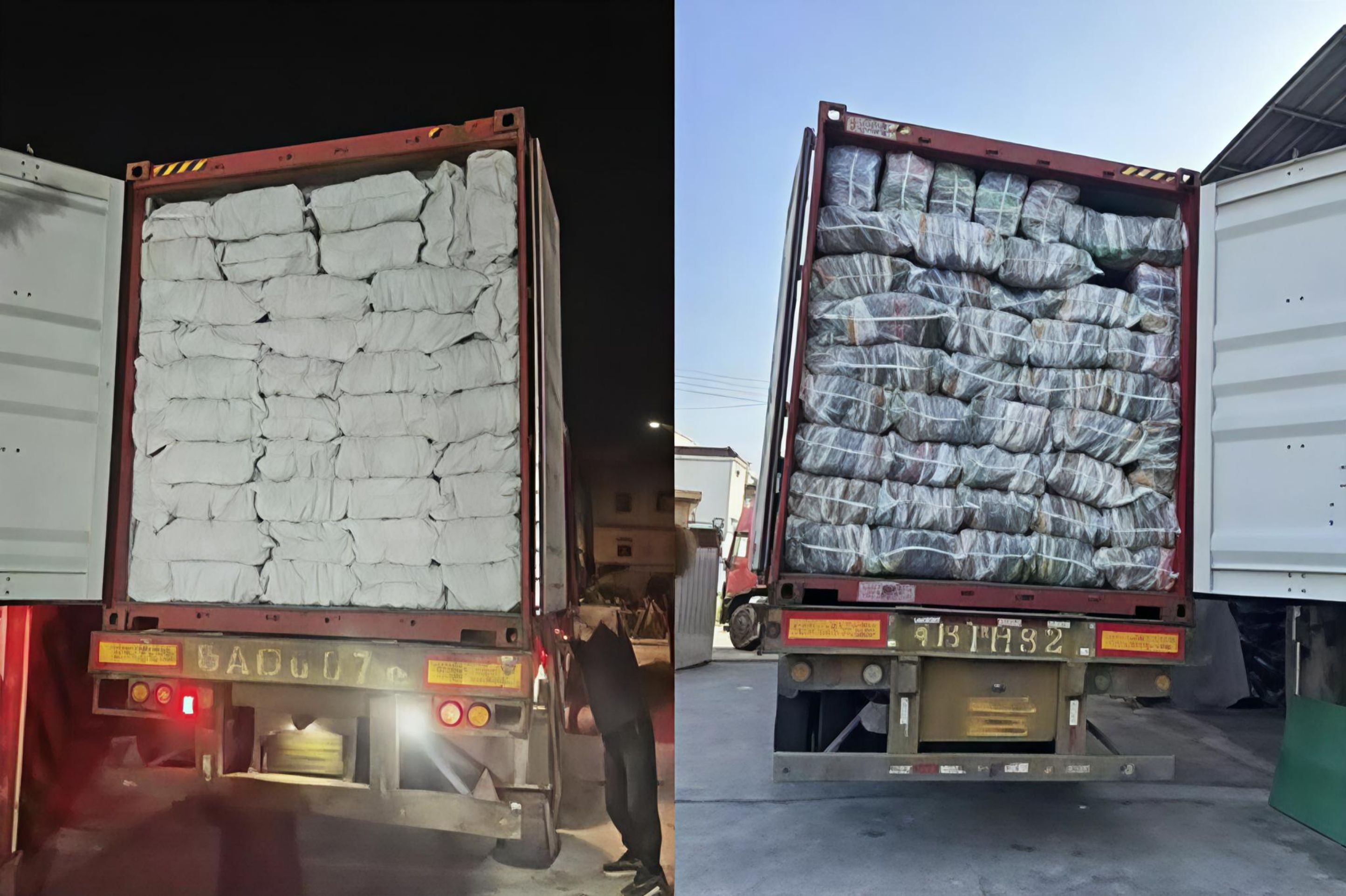
Loading a container is where many factories waste 5-10% of the buyer's money through poor space management. Our logistics team uses "3D Loading Plans" to maximize every cubic meter.
- The Bottom-Heavy Strategy: Heavy shoe sacks and 100kg bales are placed at the bottom for stability.
- The Gap-Filling Hack: We utilize Used Bags to fill the small "dead spaces" between large bales. This is a secret way to increase the total value of your container without increasing your freight costs.
- The Container Seal: Once the container is full (reaching the 76 CBM limit for a 40ft HQ), we apply a high-security bolt seal and photograph the number for the client.
9. FAQ: Technical Questions from Importers
Q: Can I customize my category list? A: Yes. Our used clothing factory process is flexible. You can provide a "Packing List" with specific percentages for Men, Women, and Kids.
Q: How do you prevent "Single Shoes" in your process? A: We have a dedicated "Pairing Checkpoint" where shoes are tied together and verified by a secondary auditor before bagging.
Q: Do you offer video auditing? A: Absolutely. In the age of 2026 technology, we offer live WhatsApp/WeChat video tours of our sorting line, warehouse, and loading bay at any time during production.
10. Conclusion: Partner with a Process, Not Just a Price
In the second-hand wholesale market, price is what you pay, but process is what you get. A cheap container from an unverified source often turns out to be the most expensive mistake a B2B importer can make.
At Guangzhou Tengchao Trading Co., Ltd. , we don't just sell bales; we sell a professional, transparent, and hygienic supply chain. Our used clothing factory process is designed to ensure that when you open your container, every bale is a profitable asset for your business.
Ready to see our process in action?
The 2026 Global Sourcing Battle: Is Used Clothing from China or Europe Better for Your Business?
The Ultimate 2026 B2B Guide to Wholesale Used Shoes: Grading, Branding, and Profit Strategy
Related Article