
New consensus in the used sneaker market: instead of hype reselling, buyers prioritize honest condition & odor-free shoes
2026-09-11
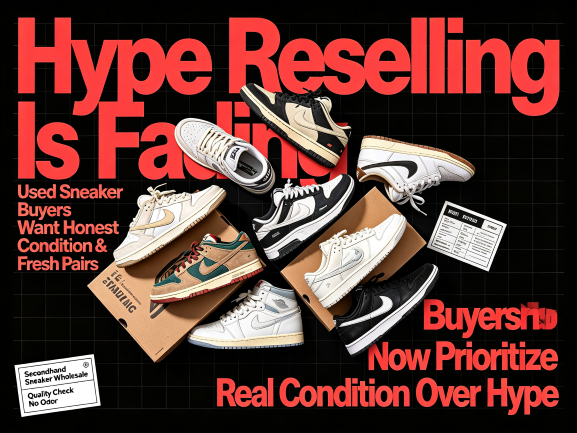
New consensus in the used sneaker market: instead of hype reselling, buyers prioritize honest condition & odor-free shoes
The global secondhand sneaker trade is undergoing a notable shift. For years, the pre-owned sneaker circle was dominated by hype reselling. Many traders and collectors chased limited-edition kicks, betting on fast price surges to make profits. Rare colorways and celebrity collabs became the top selling points, while the actual shoe condition was often overlooked.
However, market demand has changed dramatically in recent times. A new consensus has emerged among international buyers. Most purchasers no longer aim to flip hype sneakers for quick gains. Instead, they focus heavily on honest, accurate grading, clean interiors and odor-free used sneakers.
Transparent product descriptions are now the core competitive advantage for used sneaker suppliers. Overseas buyers care about real wear marks, sole condition, original box availability, stains and odors. Misleading grading, smelly insoles or hidden damage will lead to disputes, returns and bad reviews.
For bulk exporters of secondhand footwear, this trend brings clear guidance. Sorting teams need to strictly classify shoes into Grade A, Grade B and Grade C. Damaged, moldy or heavily odorous pairs should be eliminated before packing. Detailed photos showing toe creases, heel wear and inner conditions help build trust with overseas wholesalers.
The circular fashion boom keeps fueling the used shoe industry. Consumers in Southeast Asia, Africa and Latin America are big buyers of affordable pre-owned sneakers. They value wearable, clean footwear rather than expensive hype collectibles. Suppliers who stick to true condition reporting and good hygiene will win long-term repeat orders.
In short, hype reselling is losing its appeal in the used sneaker market. Honest grading and clean, fresh shoes are the new priority for global buyers.
As the global circular economy continues to mature, the used sneaker wholesale industry has stepped out of the speculative bubble that once defined its development. In the past decade, the secondhand sneaker market was largely driven by sneaker culture speculation, where limited-edition releases, brand collaboration series and celebrity-endorsed sneakers were hyped up by resellers worldwide. Many market participants focused solely on the scarcity and market premium of sneakers, ignoring practical factors such as shoe wear degree, internal hygiene and service life. This speculative model once brought huge short-term profits to individual resellers and small trading teams, but it also brought unstable market fluctuations, frequent trading disputes and uneven product quality to the entire used footwear export industry.
In recent years, with the gradual saturation of the hype sneaker resale market and the rationalization of global consumer cognition, the demand structure of the used sneaker industry has undergone a fundamental transformation. Bulk wholesale buyers from emerging markets have become the main consumer group of secondhand sneakers, replacing individual speculative collectors. These professional overseas wholesalers and offline store merchants pay far more attention to the practical value and product stability of used sneakers than the speculative value of limited styles. For them, used sneaker wholesale is a long-term stable retail business rather than a short-term flipping investment, which directly promotes the formation of the new industry consensus centered on honest condition grading and odor-free product quality.
Honest condition grading has become the primary evaluation standard for global buyers to screen reliable used sneaker suppliers. In the current international secondhand footwear trade, vague and exaggerated product descriptions have completely lost market space. Professional overseas purchasers will carefully check every detail of product display, including toe crease depth, upper scratch degree, sole wear and anti-slip pattern integrity, insole aging degree and lining dirt status. Standardized and transparent grading systems have become the basic threshold for suppliers to participate in international bulk trade. Grade A used sneakers with slight wear, no damage and complete original details are always the most popular products in cross-border wholesale orders, while products with false high grading will be firmly eliminated by the market once verified.
Odor-free and hygienic quality is another core factor that determines the repurchase rate of used sneaker wholesale. Different from new sneakers, pre-owned footwear is prone to residual sweat odor, mildew odor and peculiar smell caused by long-term wearing and storage. Poorly cleaned used sneakers not only affect the wearing experience of end consumers, but also easily cause cross-infection of bacteria and fungi, bringing potential health risks. At present, overseas buyers have extremely strict hygiene requirements for imported bulk used shoes. Many regional merchants in Africa, Southeast Asia and South America have clearly stipulated that all imported used sneakers must undergo professional disinfection, deodorization and deep cleaning treatment, and reject any moldy, smelly and unsanitary secondhand footwear.
This market change has completely reversed the traditional operation logic of the used sneaker export industry. In the early stage of the industry’s development, many exporters pursued quantity over quality, mixed high and low-grade products, and covered up product defects through simple packaging, relying on the information gap of overseas buyers to obtain profits. Today, with the popularization of online display technology and the standardization of cross-border trade rules, the information gap in the used shoe industry has basically disappeared. Every pair of bulk used sneakers can be displayed in real time through detailed pictures and videos, and buyers can accurately judge the product condition before placing orders. Under this transparent trading environment, product integrity and hygienic quality have become the core competitiveness that cannot be replaced by price and style.
Professional sorting and processing procedures are key to meeting the new market demands of used sneaker wholesale. Excellent secondhand footwear export enterprises have established a complete set of standardized processes including manual sorting, mechanical cleaning, high-temperature disinfection, professional deodorization, grade classification and fine packaging. In the sorting link, workers will strictly screen out broken-soled, cracked, deformed and moldy unqualified shoes to ensure that all outgoing products have complete usability. In the cleaning and disinfection link, professional equipment and environmental protection detergents are used to deeply clean the upper, insole and shoe interior, remove residual dirt and bacteria, and eliminate peculiar smells fundamentally. After processing, professional staff will re-grade each pair of sneakers one by one, mark the real wear condition in detail, and form standardized product labels to ensure that the product description is 100% consistent with the real object.
The shift in market demand also brings new development opportunities for small and medium-sized used sneaker exporters. In the era of hype resale, only suppliers with channel resources of limited-edition sneakers can occupy market advantages, and most small and medium-sized manufacturers can only participate in low-end disorderly competition. Nowadays, with the market returning to rationality, the industry competition focus has shifted from scarce style resources to product quality control and service capability. As long as suppliers adhere to honest operation, strictly control product hygiene and grading standards, and provide transparent and true product information, they can gain the trust of global buyers and obtain stable bulk wholesale orders. This change has standardized the industry order and created a fairer development environment for the majority of formal used footwear export enterprises.
From the perspective of the long-term development of circular fashion, the quality-oriented market consensus of used sneakers is an inevitable trend of industry upgrading. The global advocacy of environmental protection and sustainable economy has made secondhand footwear recycling one of the important tracks of the circular economy. Reusing qualified pre-owned sneakers can effectively reduce the waste of shoe-making raw materials, reduce carbon emissions generated by shoe production, and realize the maximum utilization of resources. However, the sustainable development of the used shoe industry must be based on qualified product quality and hygienic safety. Only clean, odor-free and truly graded used sneakers can achieve long-term market circulation and win the recognition of global consumers and regulatory authorities.
In conclusion, the era of relying on sneaker hype and speculative resale to occupy the used sneaker market has completely ended. The new industry consensus of focusing on honest condition grading, clean appearance and odor-free hygiene has become the unspoken rule of global secondhand sneaker wholesale trade. For all used sneaker exporters, adapting to this market change, optimizing product quality control processes, adhering to transparent and honest operation, and providing high-quality and hygienic pre-owned sneakers are the only way to achieve long-term stable development in the competitive global circular fashion market.
Why Pre-Owned Shoes & Apparel Are Worth Buying: Quality, Savings & Sustainability Guide
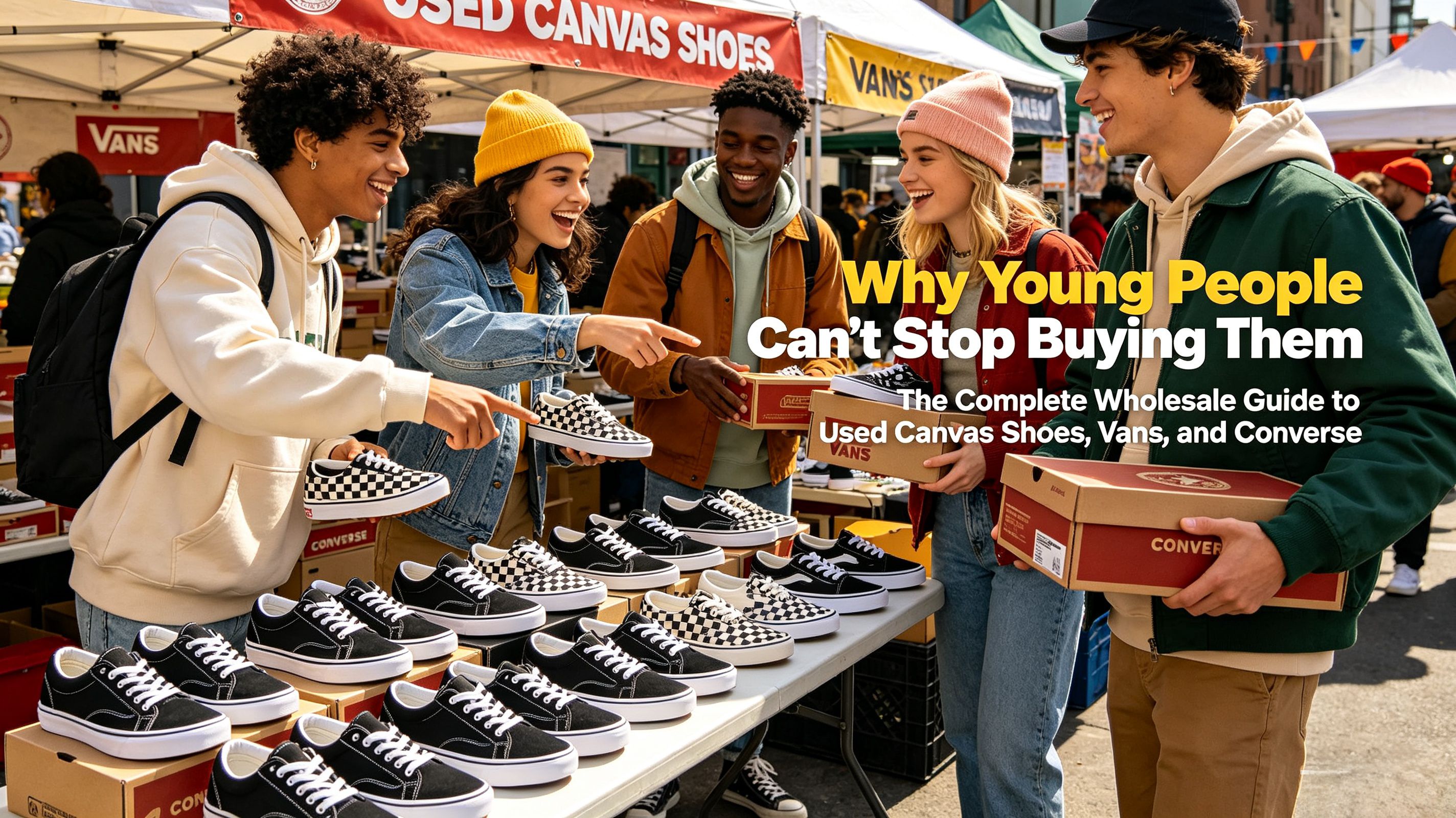
Why Young People Can't Stop Buying Them: The Complete Wholesale Guide to Used Canvas Shoes, Vans, and Converse
Related Article
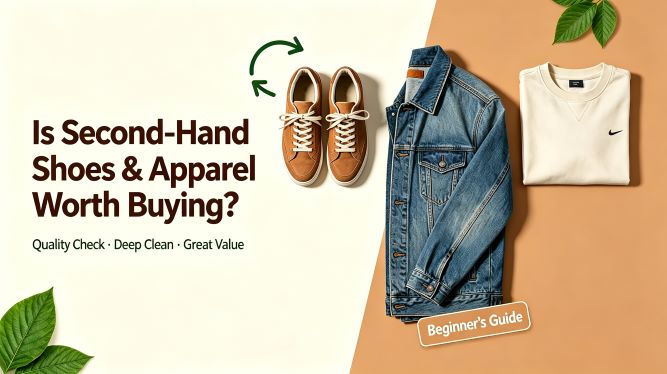
Most shoppers skip second-hand shoes and clothing for one simple reason: **they fear hidden flaws, poor hygiene, and wasted money**. If you’ve avoided pre-owned apparel and footwear because you think “used equals low quality”, this guide will change the way you shop forever.
Why Pre-Owned Shoes & Apparel Are Worth Buying: Quality, Savings & Sustainability Guide